AI Everywhere: Revolutionizing Supply Chain and Operations
Welcome to the future of supply chain and operations, where artificial intelligence (AI) and automation technologies are not just transforming the way we work — they’re reshaping industries. As we stand on the edge of the “Intelligence Revolution,” the role of AI in business growth has never been more critical. At the heart of this transformation is Generative AI (GAI), a tool that is unlocking new potential across sectors, from creative arts to manufacturing and supply chain management.
The Emergence of AI Technologies
Generative AI is leading the charge in what has been dubbed the “AI Everywhere” era. Unlike traditional AI, which performs tasks based on existing data, generative AI can autonomously create new content—whether images, music, text, or even code—empowering businesses to innovate at unprecedented speeds. Early applications of GAI have already shown promise in industries like content creation, personalized recommendations, and even drug discovery in life sciences.
However, with great power comes great responsibility. As AI systems learn from vast datasets, they can unintentionally perpetuate biases, raising concerns about privacy and ethics. The key challenge for businesses is to harness the benefits of AI while managing these risks effectively.
AI in Supply Chain and Operations
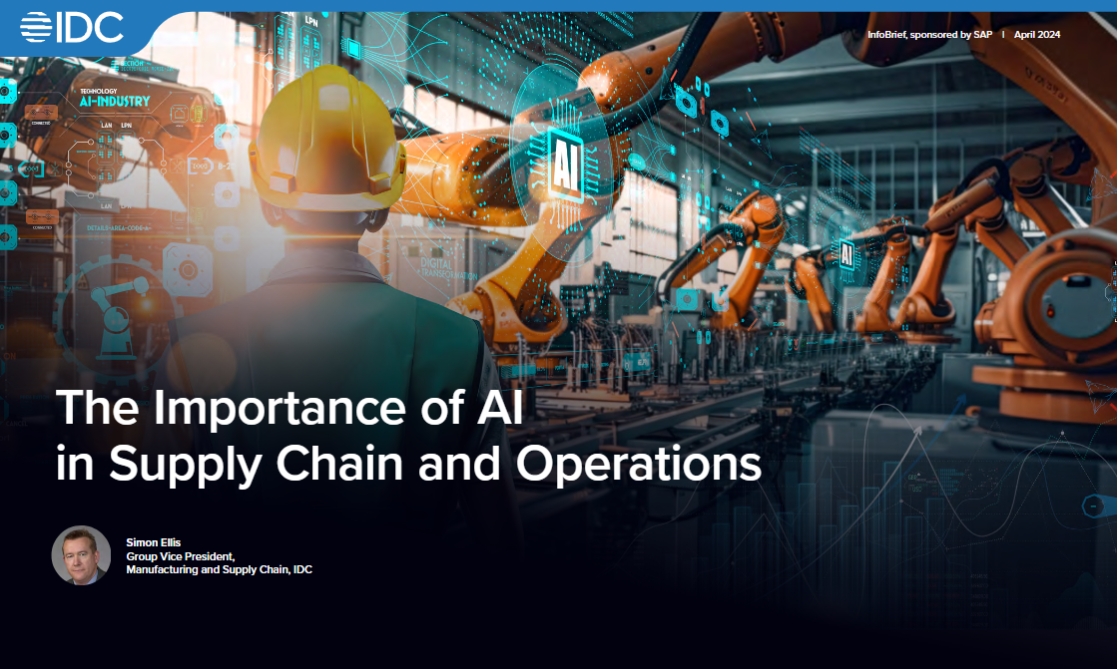
In the realm of supply chain and operations, AI’s potential is limitless. Modern cloud applications and cloud ERP systems are unlocking new levels of agility, enabling businesses to respond faster to disruptions and optimize their operations. According to the IDC 2024 Supply Chain Survey, 48% of businesses recognize the limitations of legacy systems and are seeking cloud-based AI solutions to stay competitive.
AI technologies like Machine Learning (ML), Deep Learning (DL), Computer Vision (CV), and Natural Language Processing (NLP) are already making an impact, offering solutions to streamline everything from demand planning to inventory management. In fact, businesses are projected to invest over $168 million in AI-powered ERP projects over the next two years, with a focus on improving operational efficiency, resilience, and employee productivity.
Key AI Use Cases in the Supply Chain
AI can be deployed across three broad categories:
- Productivity Use Cases: These include automating routine tasks like generating reports, code, or job descriptions to boost employee productivity.
- Business Function Use Cases: AI is embedded into core business applications like marketing, procurement, and sales to optimize operations and decision-making.
- Industry-Specific Use Cases: These require more custom AI models and are often used in complex fields like generative drug discovery or material design.
AI Strategy and Data Management
For AI to be effective in the supply chain, data quality and governance are paramount. Ensuring the right data is available and structured is crucial for AI models to deliver meaningful insights. Businesses must assess their data maturity to unlock AI’s full potential.
AI strategy must also align with business objectives. In the IDC survey, 52% of companies say their AI strategy is linked to their broader business goals, ensuring that AI implementations are tailored to deliver measurable outcomes.
Data Privacy and Security
In the world of AI, data privacy and security cannot be overstated. A robust AI governance framework is essential to mitigate risks such as data breaches, bias, and intellectual property theft. Companies must implement stringent measures to protect customer data while ensuring compliance with legal and ethical standards.
Embrace the Future with AI
As AI tools continue to evolve, now is the time for businesses to start exploring AI opportunities. Whether you are a leader seeking a competitive edge or a fast follower aiming to implement AI tools efficiently, the future is now. By partnering with the right technology providers, implementing strong data governance, and continuously optimizing AI models, companies can drive real transformation across their supply chains.
This article is posted at sap.com
Please fill out the form to access the content